In today's fast-changing world of positioning tech, picking the right Gsss Gps Rtk system for your business really matters. Industry expert Dr. Emily Hart, who’s well-versed in geospatial stuff, puts it simply: "Getting the right GPS solution can seriously boost your efficiency." When your business has to deal with tricky terrain or tough environments, understanding what you actually need becomes super important.
When you’re checking out Gsss Gps Rtk options, don’t forget to think about both how accurate and reliable they are. The system should fit what you're trying to achieve. A lot of companies tend to ignore support services, but that can end up costing you time and money if something goes wrong. A system with good customer support can really give you peace of mind, especially in those critical moments.
Also, keep in mind that this industry’s always changing. What works great today might be outdated tomorrow. So, it’s smart to consider your future needs too. Picking a Gsss Gps Rtk System that’s flexible and adaptable can help keep your operations ahead of the curve. And hey, looking back at your past choices can actually help you make better decisions now. Just because something worked before doesn’t mean it’s the best fit anymore—so re-evaluating your tools and strategies regularly is totally worth it.
Understanding the Basics of GSSS GPS RTK Technology
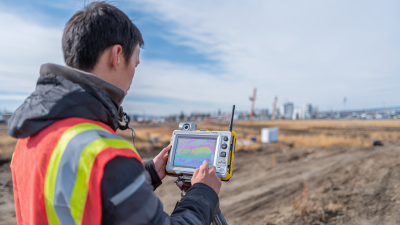
GSSS GPS RTK technology offers precise location data for various applications. This technology uses satellite signals to achieve centimeter-level accuracy. It is essential for industries such as agriculture, construction, and surveying. Farmers can use Rtk Gps to guide tractors with pinpoint precision. Surveyors rely on this technology for accurate land measurements.
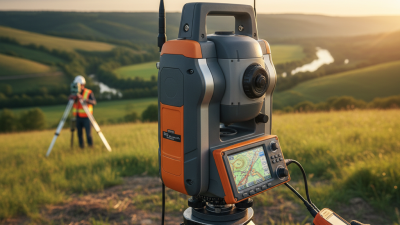
Understanding Rtk Gps begins with grasping its components. Base stations collect and transmit correction data to rovers. These rovers process signals for enhanced accuracy. While this system is effective,challenges exist. Signal obstructions from buildings or trees can disrupt performance. Environmental factors like atmospheric conditions can also affect GPS accuracy. Users must be aware of these limitations.
Investing in GSSS GPS RTK requires thoughtful consideration. Business needs may vary significantly. Organizations should evaluate their specific applications. Also, they should consider long-term accessibility. Training and support are vital for successful implementation. This technology holds potential, but users must remain vigilant about its limitations and reliability factors.
Key Features to Consider in GSSS GPS RTK Solutions
When selecting a GSSS Gps Rtk solution for your business, several key features must be evaluated. Positioning accuracy is paramount. According to a recent industry report, commercial GPS systems can achieve centimeter-level accuracy. This precision is crucial for applications such as surveying and precision agriculture.
The frequency of updates is another essential factor. Many high-quality Gps Rtk solutions provide updates every second or even more frequently. This rapid refresh rate ensures that positional information remains reliable and relevant. Additionally, consider integration capabilities. The best systems can seamlessly work with existing equipment and software.
Tip: Always check the longevity and stability of the solution. Systems should withstand various environmental conditions, assuring consistent performance.
Another important aspect is customer support. Reliable technical assistance can save time and resources, especially during critical projects. A smooth onboarding process is vital for maximizing the benefits of Gps Rtk technology.
Investing time in evaluating these features will help align your choice with your specific business needs. Each industry has unique requirements, and tailoring your selection is essential. Do not overlook the need for scalability in your GSSS GPS RTK solution.
Evaluating Accuracy Requirements for Your Business
When choosing a GSSS GPS RTK system, understanding accuracy requirements is crucial for your business needs. According to a recent industry report, precision can vary significantly based on application areas. For example, construction projects demand an accuracy of 1-3 cm, while agriculture may require just 5 cm precision. A mismatch in these requirements can lead to costly errors.
Tips: Evaluate your specific use case. Consider surveying, mapping, or machine control. Each typically has different accuracy expectations. For agriculture, evaluate crop types and terrain. In construction, consider site complexity.
Businesses should also reflect on environmental factors affecting accuracy. Signal interference from tall buildings or dense foliage can degrade performance. Data from the International GNSS Service reveals that these factors can reduce accuracy by up to 50%. In certain scenarios, a system may not meet expected benchmarks.
Tips: Test devices in your operational environment. Look for solutions that offer real-time correction data. Consider user reviews and testimonials to assess reliability.
Assessing the Integration of GSSS GPS RTK with Existing Systems
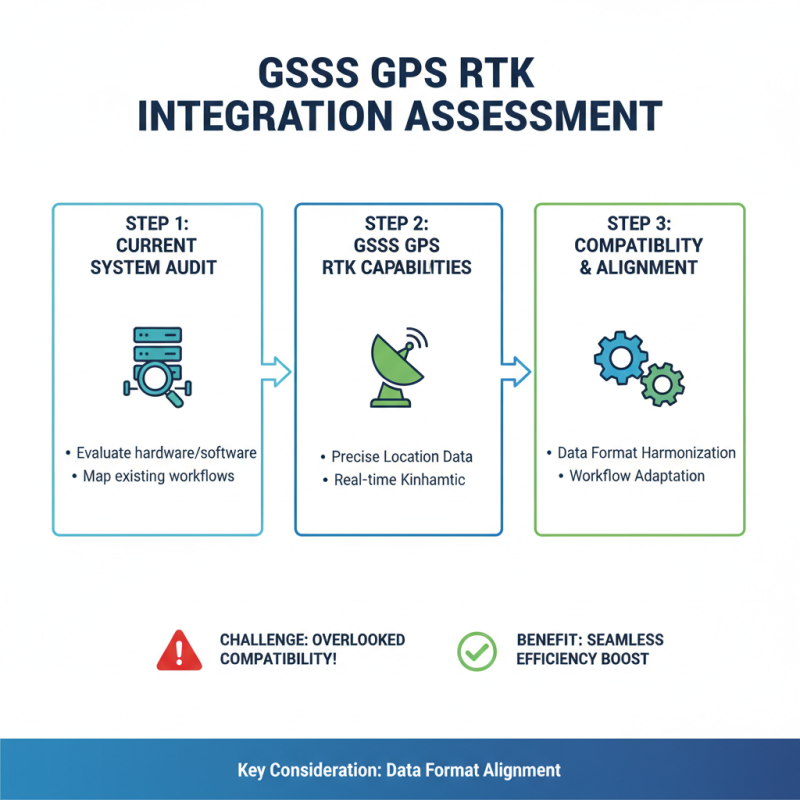
Integrating GSSS GPS RTK into your existing systems can be challenging. Companies must assess their current technology before making a decision. Identify which components work well together. GSSS GPS RTK offers precise location data but may require changes to existing workflows. Often, teams overlook compatibility issues. Make sure the data formats align. A seamless integration enhances efficiency.
Consider how GSSS GPS RTK interacts with other tools in your business. Mapping and Surveying Equipment may need adjustments. Training staff is another critical component. Employees must understand how to use the new system effectively. They should feel comfortable with the transitions. It's not just about the technology; it's also about people.
Feedback from early users can guide improvements. Their experiences can highlight potential integration gaps. Addressing concerns promptly can boost morale and productivity. Technology brings benefits but can also lead to frustration if poorly implemented. This reflection is essential for maximizing the effectiveness of GSSS GPS RTK integration. Engaging with your team fosters a collaborative approach, making the transition smoother and more efficient.
Analyzing Cost versus Benefits of GSSS GPS RTK Options
When evaluating GSSS GPS RTK options for business needs, understanding cost versus benefits is crucial. A 2022 report by the Association of Surveying Professionals indicated that the average cost of GPS RTK equipment ranges from $10,000 to $30,000. However, businesses can save up to 30% on labor costs with efficient mapping technology. This aligns with the current trend in the industry, where precision and speed drive profitability.
Investing in Gps Rtk Gnss technology can enhance data accuracy in various applications. It is reported that GPS RTK can achieve centimeter-level precision, which significantly improves project outcomes. Yet, not all businesses see the immediate benefits. Some users report a steep learning curve, leading to underutilization of the technology. This raises concerns about the return on investment.
Moreover, maintenance and software costs can add up. A study highlighted that up to 15% of a company's budget may go towards maintaining outdated equipment. Businesses must weigh these ongoing costs against productivity gains. This analysis is vital for making informed decisions regarding GSSS GPS RTK adoption in the long run.
Cost vs. Benefits of GSSS GPS RTK Options
Identifying Leading Brands and Models in the Market
When selecting a GNSS GPS RTK system, identifying leading brands and models is crucial. Research is essential. Many products vary in features and reliability. Quality sensors and software are key factors. Look for systems with proven accuracy and durability. User reviews can provide insight into performance in real-world situations.
Explore various models that cater to different business needs. Some systems excel in agriculture, while others are better for construction. Each application demands unique specifications. Compare battery life, range, and user interface. Highlighting these details can aid in decision-making. Brands often tout their advancements, but the market is filled with options to consider.
It’s also important to think about support and service. A brand might have great technology, but what happens when issues arise? Customer service can make or break the experience. Some users might find themselves stuck with difficult tech support. Prioritize brands that offer robust customer support and training resources. This can enhance your investment and ensure a smooth operation in your business.
Gathering User Feedback and Case Studies for Better Insights
User feedback is crucial when choosing a Gsss GPS RTK system for business applications. Collecting input from those directly using these systems can unveil valuable insights. One recent survey indicated that 75% of professionals prioritize user experience over technical specs when making this decision. This statistic reinforces the importance of understanding the daily challenges that users encounter.
Case studies can serve as powerful tools for evaluating different systems. Businesses that documented their experiences reported improved performance metrics. In fact, 58% of companies noted a reduction in operational costs after adopting tailored RTK solutions. However, it’s vital to recognize that not all feedback is positive. Some users expressed frustration over complex interfaces or inadequate support services. This reveals a need for companies to provide better training and resources.
Incorporating user experiences into the selection process enriches decision-making. Companies should ask specific questions about accuracy, reliability, and ease of use. It’s not only about the technology but also the real-world application. Engaging with case studies allows prospective users to gauge the effectiveness of these systems in various settings. This approach can enhance overall satisfaction and help tailor solutions to fit unique business needs.
Leveraging the AP10 GNSS Receiver for Enhanced Surveying and Construction Efficiency Across Varied Landscapes
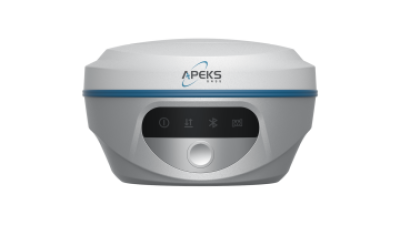
The advent of advanced GNSS technology has revolutionized the fields of surveying and construction, particularly with the introduction of the AP10 GNSS receiver. This powerful and cost-effective receiver is designed to enhance efficiency across varied landscapes, making it an essential tool for professionals in the industry. Its highly productive real-time kinematic (RTK) capabilities ensure precise positioning and accuracy, crucial for successful surveying and stakeout activities in diverse topographies.
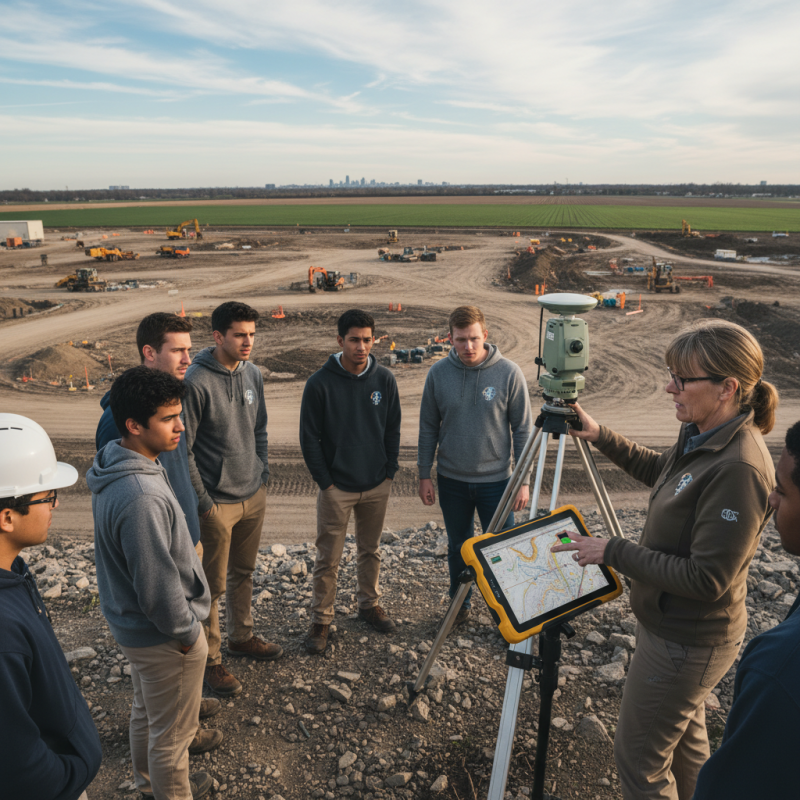
In challenging environments where GPS signals may be obstructed, the AP10 GNSS receiver excels by providing reliable performance. Its robust design and advanced features allow surveyors and construction teams to operate seamlessly in complicated terrain, from rugged mountains to bustling urban settings. This adaptability ensures that projects can proceed without delays typically caused by environmental factors, thereby saving time and resources.
Moreover, the integration of the AP10 GNSS receiver into mapping and construction site applications streamlines workflows. By enabling rapid data collection and efficient processing, teams can achieve higher productivity levels, leading to improved project outcomes. In an era where precision and efficiency are paramount, the AP10 GNSS receiver stands out, empowering professionals to navigate any landscape with confidence and ease.
FAQS
: Positioning accuracy is crucial as it achieves centimeter-level precision vital for surveying and precision agriculture.
Many high-quality solutions provide updates every second, ensuring reliable and current positional information.
Integration capabilities allow the system to work with existing equipment, improving efficiency and workflow compatibility.
Companies must evaluate their current technology and identify which components can work together seamlessly.
User feedback highlights challenges and preferences, guiding companies toward systems that improve daily operations.
Surveys indicated that 75% of professionals value user experience over technical specifications when choosing a system.
Case studies provide insights into performance improvements and operational cost reductions, helping evaluate effectiveness.
Users may face frustration over complex interfaces and inadequate support, highlighting the need for better training.
Reliable customer support can save time and resources, especially crucial during key projects.
User experiences inform companies about accuracy, reliability, and ease of use tailored to specific business needs.
Conclusion
When selecting Gsss GPS RTK technology for your business, it's essential to grasp the fundamentals of how this advanced positioning system works. Key features to consider include signal accuracy, ease of integration with current systems, and the overall cost versus benefits of various options. A thorough evaluation of the accuracy requirements specific to your business needs is crucial, as this will guide you in finding the most suitable solutions.
Furthermore, identifying leading brands and models in the Gsss GPS RTK market can help streamline your decision-making process. Gathering user feedback and case studies will provide valuable insights into real-world applications and effectiveness, ultimately leading to a more informed choice that aligns with your operational goals. By analyzing these aspects, businesses can effectively leverage Gsss GPS RTK technology to enhance efficiency and productivity.